Short answer: The World Health Organization recommends less than 2,000 mg of sodium per day for adults, equivalent to less than 5 g of salt. When you eat out every day, that limit is easy to reach because sodium hides in broth, stocks, sauces, marinades and processed meats, not just in the salt shaker — and a higher number on the scale after a salty meal does not automatically mean fat gain.
Here is a familiar scenario: you eat a salty restaurant dinner, then wake up feeling puffy and see a higher number on the scale.
That number does not tell you how much body fat changed. Sodium, carbohydrate intake, food still being digested, and other factors can all affect short-term weight.
The American Heart Association notes that excess sodium can increase water retention. But there is no reliable rule that converts a gram of sodium into a fixed amount of water or predicts exactly when your weight will settle.
Sodium matters beyond the scale
Sodium helps your nerves, muscles, and fluid balance work normally. Essential does not mean that more is better.
Habitually high intake matters because of its effects on blood pressure and cardiovascular health. The World Health Organization recommends less than 2,000 mg of sodium per day for adults, equivalent to less than 5 g of salt. Sodium and salt are not interchangeable units.
Sweating heavily can change your needs, but living in a hot climate is not a blanket reason to add more salt.
Where it hides when you eat out
The salt shaker is only part of the picture. Stocks, sauces, marinades, processed meats, and seasoning added before the plate reaches you also count.
| Meal component | What to watch |
|---|---|
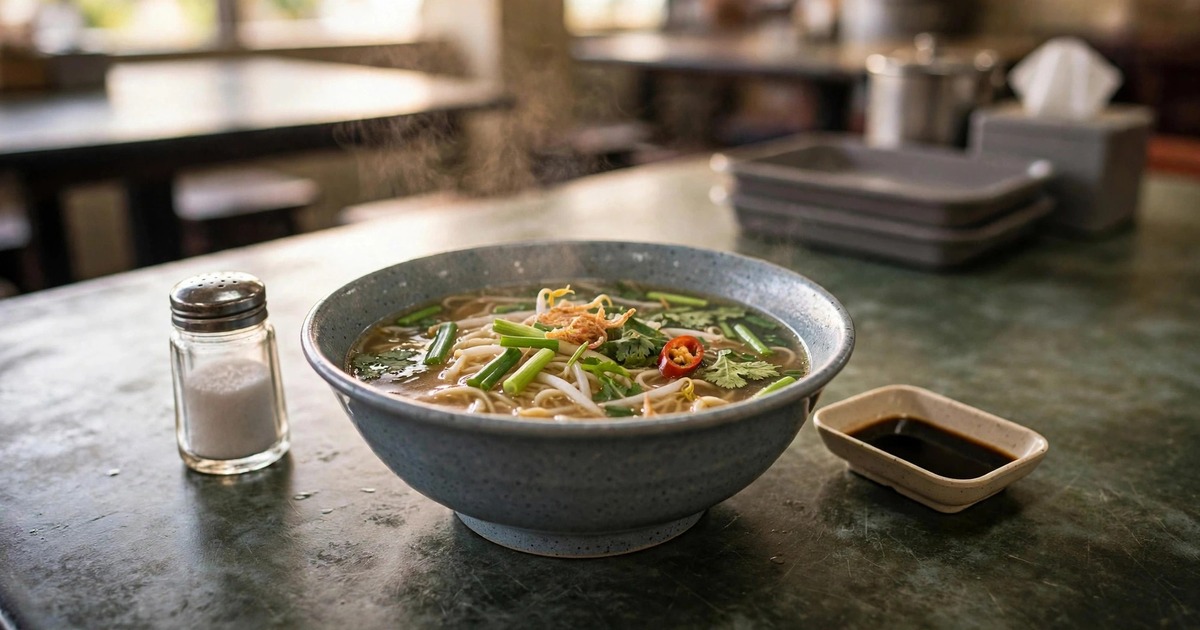
| Noodle soup | Broth, stock, and sauces can contribute substantial sodium |
| Processed meat | Compare sodium per serving on the package |
| Soy sauce and condiments | Small servings can still contribute meaningful sodium |
| Rice or vegetables | Preparation and seasoning matter more than the ingredient name alone |
Avoid treating an entire dish category as one fixed sodium number. Recipes and portion sizes differ, and a photo cannot reveal the exact amount of salt used.
Three practical changes
1. Enjoy the ingredients without finishing all the broth
Leaving some soup or asking for less gravy can reduce the amount of sodium you consume. The saving depends on the recipe and how much you leave.
This is also advice in HealthHub’s hawker eating guide.
2. Build a varied eating pattern
Include fruit, vegetables, beans, and other minimally processed foods. Do not treat a banana or coconut water as an antidote to a salty meal.
If you have kidney disease or take medication that affects potassium, follow your clinician’s advice before deliberately increasing potassium or using potassium-based salt substitutes.
3. Stay normally hydrated
Keep drinking fluids normally rather than restricting water because you feel bloated. Forcing down extra litres is not a proven sodium-flushing protocol. Follow any fluid limits your clinician has prescribed.
Read trends rather than diagnosing one weigh-in
If you monitor weight, compare measurements taken under similar conditions over time. A sudden rise is not automatically fat gain, but persistent or unexplained swelling should not be dismissed as a restaurant meal.
FoodieTrack can help you record the meal and its context. Try a description such as sliced fish bee hoon soup, left some broth. Treat the nutrition breakdown as an estimate, especially for sodium.